Georgia Swarm Season: How to Tell Spring Termite Swarmers from Flying Ants
When spring temperatures rise in Georgia, winged insects often appear indoors and around foundations. Learn how to tell termite swarmers from flying ants and understand what their presence means for your home.
Each year as the Georgia winter yields to warm, humid spring afternoons, homeowners across the Atlanta area begin noticing sudden bursts of winged insects around baseboards, light fixtures, and window frames. In the South, spring moisture combined with soil temperatures climbing into the upper sixties creates the ideal trigger for reproductive flights. For many homeowners, the immediate concern is whether these sudden visitors are harmless flying ants or wood-destroying subterranean termite swarmers.
Because both insects take flight in large groups during the same transitional weeks between March and May, confusing the two is remarkably common. However, making an accurate identification early can mean the difference between addressing an ordinary seasonal insect nuisance and catching a hidden subterranean termite colony before extensive structural damage takes place.
Why Spring in Georgia Triggers Insect Swarms
In the insect world, winged reproductives are known as alates. Their primary biological purpose is not to forage for food or excavate wood, but to leave an established, mature colony, pair off, shed their wings, and locate a suitable site to build a new colony. This mass departure is called a swarm.
Subterranean termites require significant soil moisture to survive. Georgia’s signature red clay retains water well, creating hospitable ground conditions for dense termite populations. When warm sunshine follows a steady spring rain, thousands of subterranean termite swarmers emerge simultaneously from hidden mud tubes or subterranean nests. Flying ants, including carpenter ants and various nuisance species, frequently swarm under similar weather conditions, leading to widespread confusion when insects suddenly gather on sunny porches or inside living rooms.
Physical Identification: Three Crucial Anatomical Differences
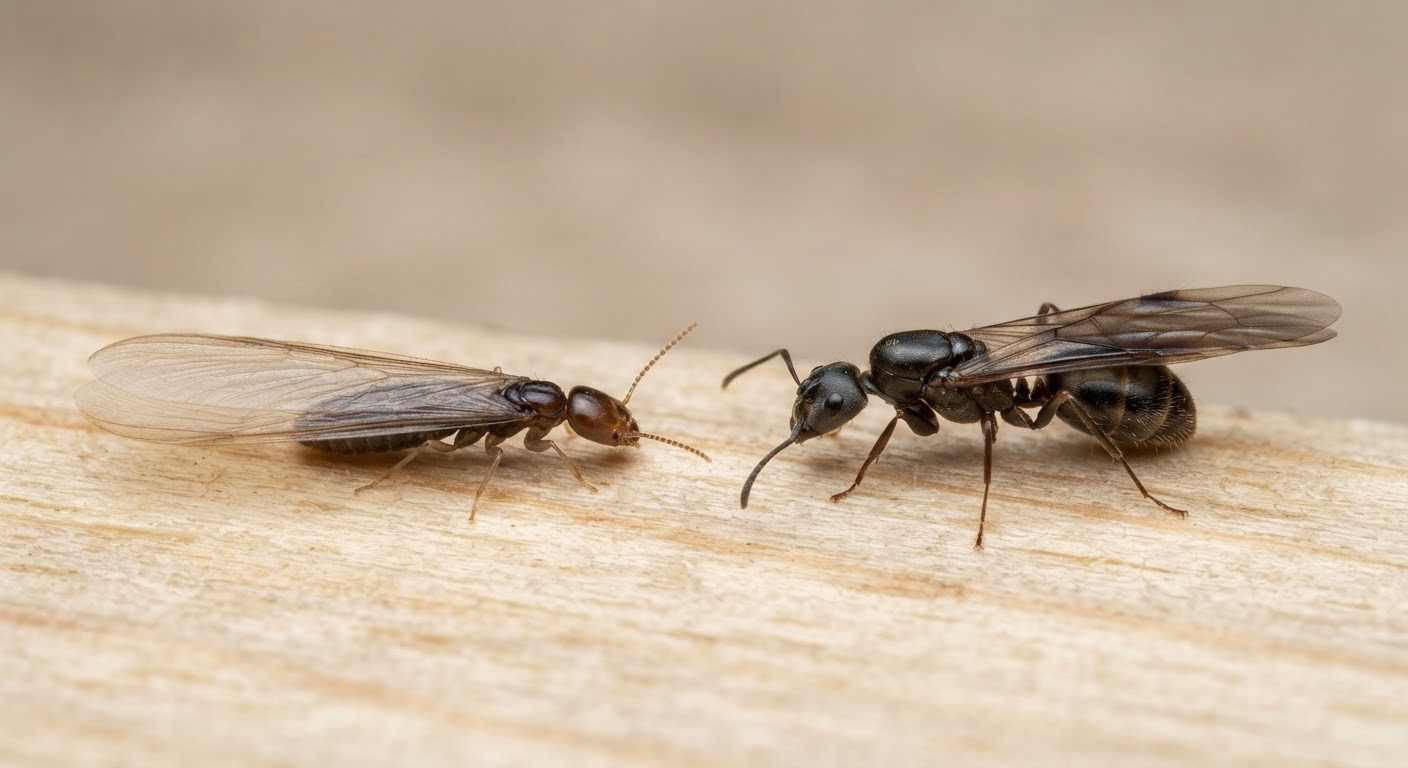
While a cloud of winged insects in your living room can look uniform at first glance, a closer look at a single specimen reveals distinct physical differences. If you can collect a couple of specimens in a clear container or on a piece of clear adhesive tape, inspect these three key anatomical areas:
1. The Waistline (Abdomen Attachment)
The profile of the insect’s body is the most reliable way to differentiate the two species:
- Termite Swarmers: Termites possess a broad, uniform body. There is no narrowing between the thorax (middle section) and abdomen (rear section). Their bodies appear straight-sided or cigar-shaped.
- Flying Ants: Ants have a distinct, pinched waist—often referred to as an hourglass figure. The thin connection between the thorax and the abdomen is clearly visible to the naked eye.
2. Antenna Shape and Structure
If you examine the insect's head with a magnifying glass or take a close-up photo with a smartphone, look closely at the antennae:
- Termite Swarmers: Termite antennae are straight and look like tiny strands of uniform beads stacked on top of one another.
- Flying Ants: Ant antennae are distinctly "elbowed" or bent at an angle, resembling a miniature arm bent at the elbow joint.
3. Wing Proportions and Vein Appearance
Both insects have four wings (two pairs), but their size and structure differ substantially:
- Termite Swarmers: Termite wings are completely equal in size and shape. Both the front and rear wings are translucent, smoky, or milky, and they extend well past the end of the abdomen—often measuring twice the length of the body. They contain very few visible veins aside from a thickened border along the top edge.
- Flying Ants: Ant wings are unequal in size. The forewings (front pair) are noticeably larger and longer than the hindwings (rear pair). In addition, ant wings typically have prominent, dark veins forming a visible network across the surface.
Behavioral Differences: Clues Beyond Anatomy
Beyond bodily structure, how and where these insects behave provides critical context about what you are dealing with.
Discarded Wings on Windowsills
Termites are notoriously poor flyers. Their flight is typically short and fluttery, lasting only minutes before they land. Almost immediately upon touching down, termite swarmers intentionally twist and shed their wings before seeking soil or moisture. If you find small piles of identical, translucent, detached wings along interior window sills, beneath sliding glass doors, or near bathroom vents without many intact bodies nearby, that is a classic indicator of a termite swarm.
Flying ants, conversely, retain their wings throughout their mating flight and for a prolonged period afterward. While queen ants eventually shed their wings after mating, male ants die with their wings attached. You rarely see widespread accumulations of loose ant wings scattered across an interior surface.
Swarming Location: Indoors vs. Outdoors
Location provides essential perspective regarding risk:
- Outdoors: Spotting a swarm around an old pine stump, landscape ties, or a woodpile in the backyard indicates active insect life in the neighborhood, but it does not automatically confirm an infestation in your home. Subterranean termites and ants play natural roles in decomposing fallen timber in Georgia’s forests and yards.
- Indoors: Finding dozens or hundreds of swarmers emerging from baseboards, electrical outlets, expansion joints, or crawl space access doors almost always indicates that an active colony has established a path inside the building footprint. Termite swarmers inside are drawn to sunlight, which is why they congregate in large numbers at windows and exterior doors.
Understanding the Potential Structural Risk
While neither termite swarmers nor flying ants bite or pose a direct physical threat to people or pets, the presence of an underlying colony requires attention.
Most flying ants belong to species that nest in soil or decaying outdoor mulch and enter homes merely by mistake during swarming flights. However, carpenter ants can excavate hollow galleries inside damp structural framing. While carpenter ants hollow out wood rather than consume it, substantial colonies can cause localized structural weakness over time.
Subterranean termites, on the other hand, represent a constant structural threat throughout the Southeast. Unlike ants, subterranean worker termites consume cellulose—the structural component of wood framing, subflooring, and drywall paper—twenty-four hours a day. When swarmers emerge indoors, it usually means a mature colony has already found an entry route through foundation cracks, plumbing penetrations, or crawl space piers.
Steps to Take If You Spot Swarmers
If you encounter a swarm inside your home, remaining calm and taking deliberate steps will help you resolve the situation efficiently:
- Collect Specimens: Place several intact insects and any discarded wings into a sealed zip-top bag or a small container. Having a physical sample helps a pest professional quickly verify the species without guesswork.
- Avoid Emptying Over-the-Counter Aerosols: Spraying surface insect spray into the room may kill the visible swarmers, but it does nothing to stop the hidden colony living beneath the foundation. Worse, strong chemical repellents can cause subterranean termites to redirect their foraging paths, complicating professional treatment efforts.
- Vacuum the Swarmers: You can clean up the active swarmers with a vacuum cleaner. Empty the canister or dispose of the vacuum bag immediately outdoors.
- Inspect Common Moisture Areas: Take note of any areas near the swarm that show signs of plumbing leaks, high humidity, or chronic dampness. Georgia homes with vented crawl spaces are especially prone to elevated ambient moisture, which creates inviting conditions for subterranean pests.
- Schedule a Professional Inspection: Because swarmers originate from hidden colonies, identifying their entry point and evaluating the structural timber requires a trained inspection of the foundation perimeter, crawl space, and vulnerable ground-to-wood contact points.
Protecting Your Atlanta Home This Spring
Georgia’s mild climate and abundant natural timber make termite awareness a seasonal necessity. If you have discovered flying insects, piles of shed wings, or unexplained mud tubes near your foundation, Kestrel Forge Pest Control provides thorough, professional termite inspections and localized treatment solutions tailored to your property. Contact our team today to schedule an inspection and ensure your home stays protected throughout the swarm season.
Need help from Kestrel Forge Pest Control?
Contact our team to discuss your service needs in Atlanta and surrounding service areas.