Fall Rodent Proofing: Sealing Rooflines and Foundations Before Temperatures Drop
As temperatures dip in autumn, rodents seek warmth in attics and crawl spaces. Learn how to inspect and seal rooflines and foundations against mice and rats before winter.
Why Fall Triggers Rodent Invasions in Atlanta Homes
As summer humidity fades and autumn brings crisper evening temperatures to Georgia, the local wildlife begins preparing for the colder months ahead. While animals outdoors forage to store energy, commensal rodents—specifically roof rats, Norway rats, and house mice—seek warm, secure harborage for nesting. In urban and suburban communities throughout the Atlanta area, our homes offer the ideal winter retreat: dry shelter, reliable warmth, and proximity to food and water.
Rodents do not need a large invitation to move inside. A full-grown house mouse can squeeze through an opening the size of a dime (roughly one-quarter of an inch), while a mature rat requires an opening no larger than a quarter (roughly one-half inch). Once inside your structure, rodents quickly establish pathways through wall voids, ductwork, and insulation. Preventing this seasonal migration requires a proactive approach focused on exclusion: physically sealing the structural transitions where the ground meets your foundation and where your walls meet the roof.
The Vulnerable Roofline: How Tree Canopies Aid Rodent Entry
Atlanta is famous for its dense tree canopy, with mature oaks, pines, and sweetgums hanging directly over neighborhood rooflines. While this canopy provides excellent shade during hot summers, it acts as a highway system for roof rats (Rattus rattus) and squirrels as temperatures fall. Roof rats are agile climbers that prefer nesting in high places such as attics, ceiling voids, and insulated soffits.
When these pests travel along overhanging branches, they target several common structural vulnerabilities along the upper exterior of the home:
- Fascia and Soffit Intersections: Over time, exposure to moisture can cause wood fascia boards to soften or warp. Rodents exploit minor gaps where the fascia meets the soffit panels, gnawing at softened wood until an opening is large enough to slip through.
- Ridge Vents and Attic Louvers: Modern plastic or aluminum ridge caps along the peak of the roof often feature plastic baffles or light mesh. Rodents can chew through thin plastic mesh to enter the attic directly from the roof deck. Gable vents with rusted or loose screening present a similar vulnerability.
- Roof Returns and Eave Gaps: Where an upper roof slope terminates into a lower wall, architectural roof returns frequently leave unsealed gaps behind the trim. These recessed corners give rodents a protected, hidden entry point shielded from rain and wind.
- Plumbing Vent Stacks: Vent pipes that penetrate the roof deck require rubber or metal boot flashings. Aging rubber gaskets crack and split under sun exposure, allowing rodents to enter the attic along the exterior of the pipe.
Ground-Level Threats: Inspecting Foundations and Crawl Spaces
While roof rats attack from above, Norway rats and house mice typically target the lower envelope of the home. Homes built on raised crawl space foundations, split-level foundations, or traditional basements face distinct challenges as autumn approaches.
To secure your foundation against cold-seeking rodents, focus your inspection on these ground-level weak points:
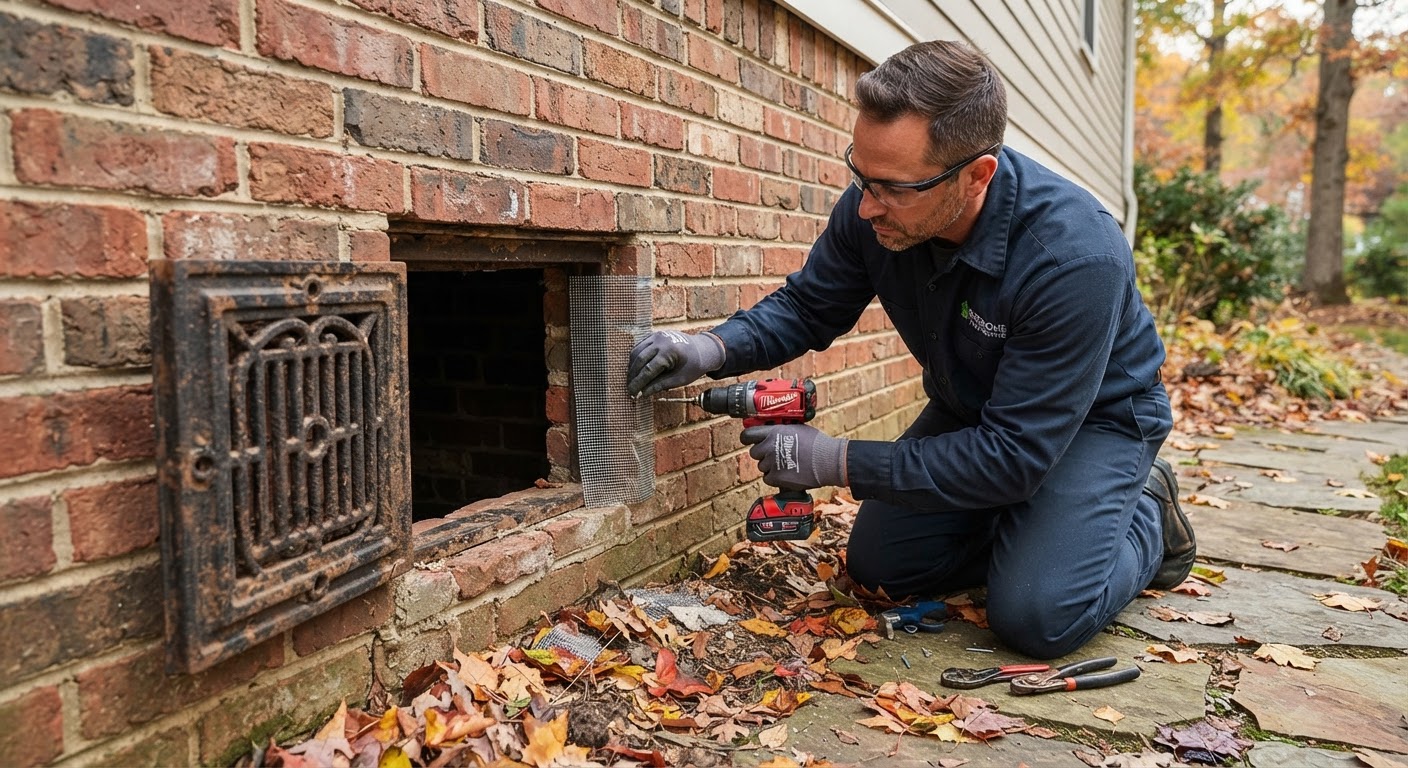
- Crawl Space Foundation Vents: Standard crawl space vent grates are often made of stamped sheet metal or thin plastic that can be pushed loose, rusted through, or gnawed open. If the screening behind the vent frame is torn or separated from the masonry, it serves as an open gateway into the subfloor.
- Utility Penetrations: Heating and cooling lines, plumbing supply lines, electrical conduits, and gas pipes often pass through masonry foundations or siding. Installers regularly cut oversized holes to accommodate these lines, leaving gaps that are hidden behind disconnect boxes or HVAC covers.
- Crawl Space Access Doors: Exterior wooden crawl space hatch doors often warp, settle, or rot around the perimeter, creating wide horizontal gaps along the ground. Even a slight settling of soil beneath the door frame can expose an entry gap.
- Weep Holes and Brick Veneer: Brick veneer homes require weep holes along the bottom course of masonry to allow moisture drainage. While necessary for structural moisture management, unobstructed weep holes allow mice direct access into the wall cavity behind the brick.
- Expansion Joints and Garage Door Seals: Weatherstripping along the bottom of garage doors hardens and cracks over time. When garage doors do not make flush contact with the concrete apron, rodents easily move into the garage and work their way toward interior utility closets and living spaces.
Exclusion Materials: What Works and What Fails
A common mistake homeowners make when attempting DIY rodent proofing is using inappropriate materials that rodents can destroy in minutes. Expanding polyurethane foam from a spray can, standard silicone caulk, and plastic mesh are not rodent-proof. Rats and mice have open-rooted incisors that grow continuously, and their bite pressure can easily shred foam, rubber, and soft plastic.
Effective, long-lasting exclusion requires durable, chew-resistant commercial materials:
- Galvanized Hardware Cloth: Quarter-inch (or smaller) galvanized steel wire mesh is the industry standard for covering vents, crawl space grates, and large structural voids. The heavy-gauge zinc coating resists rust, and rodents cannot chew through the steel.
- Stainless Steel or Copper Mesh: For smaller gaps around utility pipes, pack the void tightly with coarse stainless steel mesh or knitted copper mesh before sealing. Unlike standard steel wool, stainless steel and copper do not rust or discolor exterior surfaces when exposed to rain.
- Elastomeric Masonry Sealants: Once voids are packed with metallic mesh, finish the seal with a high-grade polyurethane or elastomeric sealant. This locks the mesh in place, blocks airflow (which rodents use to detect indoor warmth), and prevents water intrusion.
- Metal Flashing and Trim: Heavy-gauge galvanized sheet metal or aluminum flashing should be installed along gnawed wood trim, door thresholds, and roof fascia junctions where physical barriers are required across wide gaps.
- Specialized Weep Hole Covers: Never seal weep holes shut with solid caulk or mortar, as this traps condensation inside the wall. Instead, insert corrosion-resistant stainless steel weep hole inserts that allow air and water to flow while keeping rodents out.
A Step-by-Step Fall Inspection Checklist
To prepare your property before winter arrives, conduct a thorough exterior inspection using this step-by-step checklist:
- Trim Vegetation: Cut tree branches back at least six to eight feet from your roofline and gutters. Clear climbing vines, such as English ivy, off exterior walls and chimneys to remove natural climbing ladders.
- Clear the Foundation Perimeter: Remove heavy layers of pine straw, mulch, firewood piles, and leaf litter within twelve to eighteen inches of your foundation wall. Bare ground removes the cover rodents rely on while hunting for wall gaps.
- Examine the Eaves: Walk the perimeter of your home on a sunny afternoon and look upward. Look for discolored areas, dark grease marks (rub marks left by rodent fur), or visible light entering roof transitions.
- Inspect Crawl Space Vents: Check every exterior vent frame. Ensure the mesh is intact, free of tears, and securely fastened to the surrounding brick or concrete block.
- Seal Pipe Penetrations: Locate the exterior HVAC line set and outdoor spigots. Pack any space between the pipe and wall with metallic mesh and seal it flush with exterior-rated sealant.
- Check Exterior Doors: Inspect weatherstripping and sweep seals on all exterior doors, including basement doors and walk-in crawl space doors. If daylight is visible underneath closed doors, install heavy-duty metal-backed door sweeps.
Why Exclusion Must Precede Elimination
Placing traps or bait inside a home without sealing exterior entry points is a temporary fix that fails to solve the root problem. As long as structural openings remain along the roofline or foundation, new rodents will continue to replace the ones that are caught. In fact, rodents leave chemical scent markers along their travel routes that signal safety and food to others in the vicinity.
A comprehensive rodent management strategy prioritizes physical exclusion first. By sealing gaps with permanent materials, you remove the pathways into your attic, walls, and crawl space. Any rodents trapped inside can then be safely removed through targeted trapping without risking further outdoor migrations into your living space.
Protect Your Home with Professional Rodent Proofing
Sealing high rooflines and working around intricate foundation transitions can be difficult and dangerous without specialized equipment. If you want to protect your property against unwanted pests this winter, Kestrel Forge Pest Control provides thorough exterior inspections, durable exclusion services, and targeted rodent management tailored to your home's unique structure. Contact Kestrel Forge Pest Control today to schedule your fall rodent inspection and secure your home before temperatures drop.
Need help from Kestrel Forge Pest Control?
Contact our team to discuss your service needs in Atlanta and surrounding service areas.