Subterranean vs. Drywood Termites: Identifying Georgia's Primary Structural Pests
Learn how to distinguish between subterranean and drywood termites in Georgia, from mud tubes and fecal frass to swarming behavior and specific damage patterns.
Georgia sits in one of the most active termite regions in the United States. Thanks to the state's warm temperatures, extended summers, and abundant humidity, wood-destroying insects thrive year-round. For homeowners in the Atlanta metropolitan area, structural timber is perpetually vulnerable to termite activity. However, not all termites behave the same way, nor do they inflict damage through identical mechanisms.
The two primary groups of termites responsible for structural issues across Georgia are subterranean termites and drywood termites. Correctly identifying which species is present in or around a structure is essential because their biology, nesting habits, and required treatment protocols differ substantially. Misidentifying the pest can lead to ineffective treatments and ongoing, costly structural degradation.
Understanding the Biology and Nesting Habits
The most fundamental difference between subterranean and drywood termites lies in where they live and how they obtain the moisture necessary for their survival.
Subterranean Termites: Rooted in the Soil
Subterranean termites, primarily the Eastern subterranean termite (Reticulitermes flavipes) and the invasive Formosan subterranean termite (Coptotermes formosanus), require constant moisture to survive. Because open air desiccates their soft bodies, they establish their primary colonies underground within the soil.
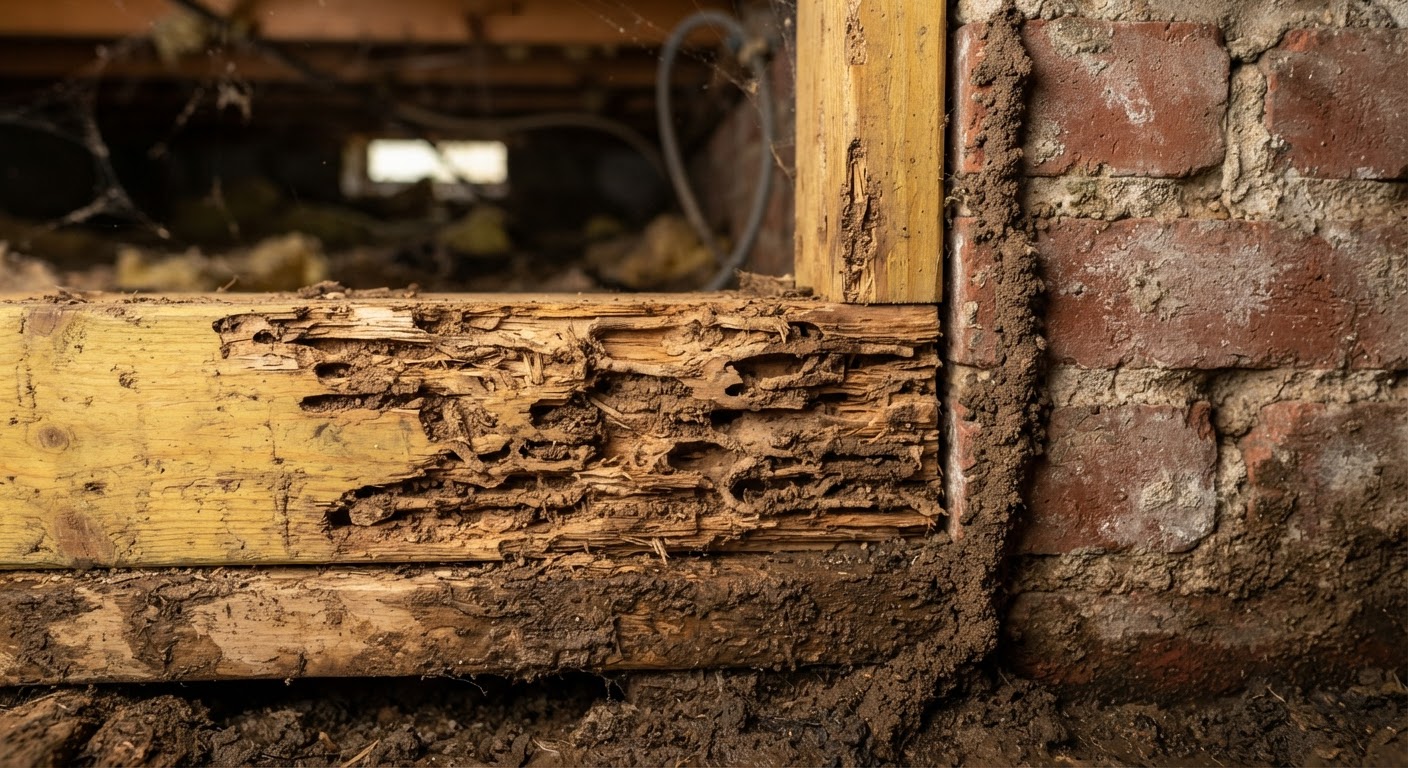
To access wood above ground—such as a home's sill plates, wall studs, subflooring, or floor joists—subterranean termites construct distinctive shelter tubes out of soil, saliva, and digested cellulose. These tubes, commonly known as mud tubes, maintain high humidity and shield workers from drying winds and predators like ants as they forage between the damp Georgia clay and the wooden components of a home.
Drywood Termites: Contained Entirely in Wood
Unlike subterranean species, drywood termites (principally Incisitermes snyderi in Georgia) do not require contact with the soil. They obtain all the moisture they need directly from the ambient humidity in the air and the wood they consume. A drywood termite colony lives entirely inside sound, dry structural lumber, fascia boards, window frames, roof rafters, or hardwood furniture.
While drywood termites are most prevalent in coastal areas of the Southeast, they regularly turn up in Atlanta and inland Georgia. They can enter homes through roof vents, crevices around window trim, or via infested antique furniture, salvaged lumber, and wooden shipping materials brought into the property.
Physical Identification: Swarmers and Soldiers
Homeowners often first encounter termites during a "swarm," when reproductive individuals (called alates) grow wings and emerge in large numbers to mate and establish new colonies. Differentiating swarmers and soldiers provides clear evidence of the species involved.
Winged Alates (Swarmers)
- Subterranean Swarmers: Eastern subterranean swarmers are typically solid dark brown to pitch black and measure about three-eighths of an inch long, including their wings. Their wings are translucent with a slightly milky or brownish tint and feature two major, dark veins along the top margin. Subterranean termites in Georgia generally swarm during the daytime in the spring months, frequently following warm rain showers.
- Drywood Swarmers: Drywood alates are generally larger than subterranean swarmers, measuring between seven-sixteenths to a half-inch in length. Their bodies range from amber-brown to reddish-brown rather than deep black. Their wings feature an intricate pattern of three or four heavily pigmented veins along the leading edge. Drywood swarms typically occur in late spring, summer, or early autumn, often during dusk or at night when they are drawn to exterior lights.
Soldier Castes
If you uncover active wood damage, you may find soldier termites protecting the workers:
- Subterranean Soldiers: These have rectangular, flattened head capsules that are pale yellow, equipped with toothless, pincer-like mandibles that cross slightly at the tips.
- Drywood Soldiers: Their heads are larger, darker, and more squared, with distinctly larger, toothed jaws that are powerful enough to plug exit holes or fend off invading predators.
Signs of Infestation: What to Look For
Because termites work silently behind finished surfaces, structural damage can proceed undetected for months or even years. However, each group leaves distinct clues in the areas they inhabit.
Signs of Subterranean Termite Activity
- Mud Tubes: Pencil-width tubes made of red Georgia clay and debris running along foundation walls, piers, crawl space footings, floor joists, or plumbing penetrations are the hallmark sign of subterranean activity.
- Soil in Damaged Wood: When you probe wood damaged by subterranean termites, you will find dried mud and soil packed inside the galleries.
- Blistered Drywall or Paint: Subterranean termites occasionally consume the paper backing of drywall, leaving behind wavy, bubbling paint lines or tiny pinpoint pinholes sealed with brown dirt.
- Discarded Wings Near Windows: After swarming, subterranean alates quickly shed their wings, leaving piles of identical translucent wings on windowsills, crawl space vents, or concrete pads.
Signs of Drywood Termite Activity
- Fecal Pellets (Frass): Because drywood termites do not use mud to build tunnels, they actively push their waste out of the wood through tiny "kick-out holes." Drywood frass consists of tiny, hard, six-sided pellets with concave surfaces, often accumulating in small, sand-like mounds directly below infested trim, rafters, or furniture. The color varies depending on the wood they are eating, ranging from light tan to dark brown.
- Clean Galleries: When inspected internally, drywood galleries are exceptionally clean, dry, and free of dirt or mud residue.
- Hollowed Exterior Trim: You may notice hollow-sounding eaves, soffits, fascia boards, or door headers without any external signs of mud tubes leading from the ground.
Comparing Damage Patterns
Subterranean and drywood termites consume wood differently, leaving distinctive internal footprints within structural framing:
- Subterranean Damage: Subterranean termites prefer the softer springwood and leave the harder summerwood intact. This feeding behavior creates a layered, honeycomb-like pattern of damage that follows the wood grain. Because they bring moisture and soil into the structural members, the surrounding wood often feels damp, soft, or spongy.
- Drywood Damage: Drywood termites chew across the wood grain without distinction, cutting through both soft and hard growth rings. They carve out large, smooth, interconnected chambers connected by small tunnels. Their feeding leaves the outer shell of the wood looking perfectly intact like a veneer, while the interior is hollowed out completely.
Prevention and Structural Management in Atlanta
Preventing termite damage requires addressing the environmental vulnerabilities specific to each type of pest.
Preventing Subterranean Termites
Because these pests depend on ground moisture, defense centers on eliminating soil-to-wood contact and managing water around the structure:
- Ensure gutters and downspouts divert rainwater at least several feet away from foundation walls to prevent the saturation of perimeter soil.
- Maintain a minimum of six inches of clearance between bare soil and any wood siding, framing, or deck posts.
- Avoid piling firewood, timber scraps, or heavy wood mulch directly against exterior foundation walls.
- Address crawl space humidity through proper vapor barriers, cross-ventilation, or full encapsulation to remove ambient ground moisture.
Preventing Drywood Termites
Drywood defense focuses on sealing access points and protecting exposed wood on the upper levels of the structure:
- Cover exterior attic vents, soffit openings, and crawl space vents with fine, corrosion-resistant mesh screening to block swarming adults.
- Keep exterior siding, eaves, and architectural trim properly primed, painted, or stained to seal porous entry points.
- Inspect salvaged timber, reclaimed architectural elements, and antique wooden furniture thoroughly before introducing them into your home.
Professional Identification and Treatment
Treating subterranean termites typically involves establishing a continuous protective zone in the soil around the foundation using specialized liquid barriers or installing perimeter baiting systems that worker termites distribute throughout the colony. In contrast, drywood termite management focuses on the wood itself, utilizing targeted structural wood injections, localized spot treatments, or, in widespread cases, full structural fumigation.
Because the necessary treatment depends entirely on the specific pest, an accurate professional assessment is the only reliable way to protect your investment. If you suspect termite activity, discover mud tubes, or find unexplained piles of pellets around your home, contact Kestrel Forge Pest Control for a thorough termite inspection in Atlanta.
Need help from Kestrel Forge Pest Control?
Contact our team to discuss your service needs in Atlanta and surrounding service areas.